How to Stop Clothes Chewing — Sensory Chewing Solutions That Actually Help
You buy a new hoodie. Within a few weeks, the cuffs are soaked and the collar is stretched beyond saving. If your child chews on their sleeves, necklines, or hoodie strings, you're not alone — and it's more common than most people realise.
For children with sensory sensitivities, chewing on clothing usually isn't a habit to break. It's often the body's way of asking for something it needs.
This guide will help you understand why sensory chewing happens — and what you can actually do to support your child through it.
Why Does My Child Chew on Their Clothes?

There are a few reasons this might be happening:
-
Oral sensory seeking — the mouth is full of sensory receptors, and chewing provides strong, regulating input
-
Stress or anxiety — chewing is a self-soothing behaviour, especially in overwhelming environments
-
Emotional regulation — it can help a child feel grounded when emotions are hard to manage
-
Sensory processing differences — some children need more oral input than others to feel regulated
It's worth noticing when the chewing happens most. Is it during homework? At school? After busy social situations? Patterns usually reveal the underlying trigger — and once you know the trigger, you can start to address the need, not just the behaviour.
Is Chewing on Clothes a Sensory Issue?
Often, yes. Chewing is one of the most common oral sensory seeking behaviours. Children who seek oral input may also bite pencils, mouth toys, grind their teeth, or prefer very chewy or crunchy foods.
The mouth is one of the most powerful sensory inputs available to us. For some children, chewing isn't optional — it's regulating. Think of it like an adult who taps their foot when stressed or chews gum to concentrate. For a child with higher sensory needs, that impulse is often much more intense.
Approaching it with curiosity rather than frustration will change everything about how you respond — and how your child feels.
How to Help — Practical Strategies
1. Offer Safe Chewing Alternatives

The most effective first step is usually to replace clothing with something designed for chewing. Options include:
-
Chew necklaces
-
Silicone chew tools
-
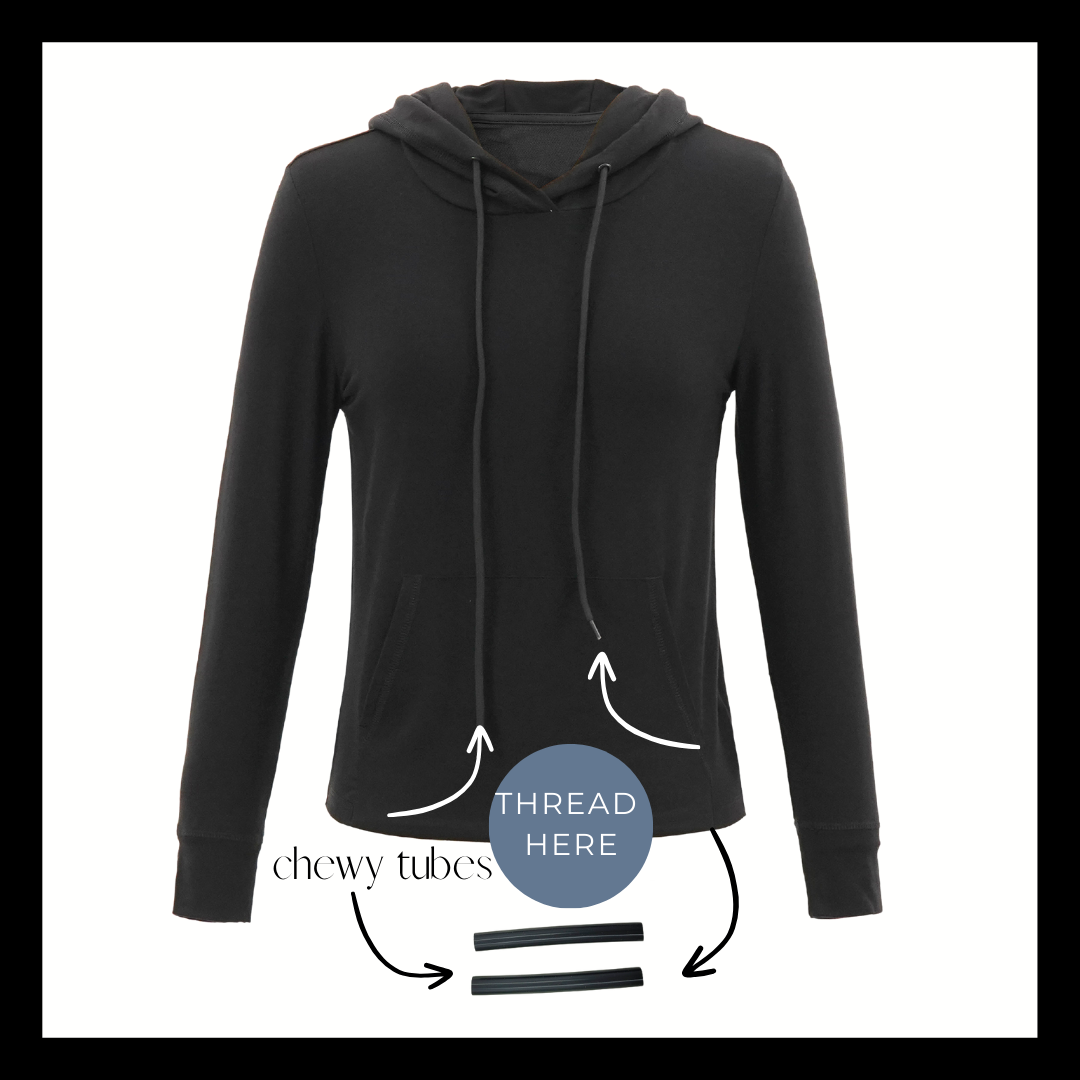
Chewy tubes
-
Oral sensory fidgets
These give children the same sensory input in a way that's safe and socially appropriate. The Chewy Tubes from Comfort on the Spectrum are a popular option — durable, safe, and easy to carry through the day.
2. Identify What's Triggering It
Before you can reduce chewing, it helps to understand what's driving it. Keep a loose mental log:
-
Does it spike before school transitions?
-
During homework or screen time?
-
After a socially demanding day?
Once you know the pattern, you can offer support before the chewing starts — not just redirect once it's already happening.
3. Build In Sensory-Regulating Routines
Children with sensory needs often do best when the day has some predictability built in. Helpful supports might include:
-
Movement breaks
-
Quiet decompression time after school
-
Deep pressure activities
-
A calm-down space at home
-
Regular chew breaks with appropriate tools
A body that feels regulated throughout the day is less likely to seek intense sensory input from clothing.
4. Look at the Clothing Itself
This one's often overlooked. If clothing is scratchy, tight, or irritating, it adds to sensory stress — which can increase chewing and dysregulation. Soft, tag-free, flat-seam clothing reduces that baseline discomfort.
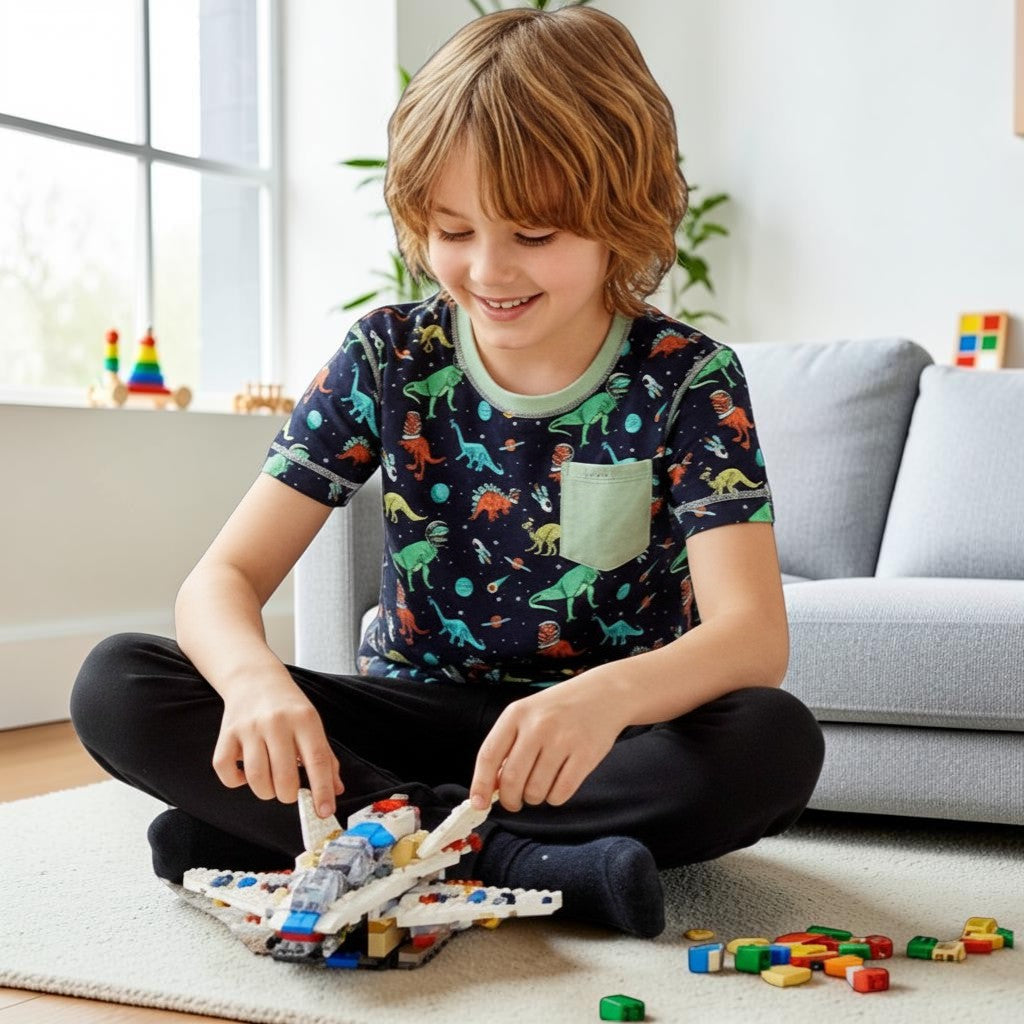
Some families find that switching to sensory-friendly styles makes a noticeable difference. Our sensory-friendly hoodies, long sets, and t-shirts are designed with this in mind — no tags, no scratchy seams, nothing to fight against.
Hoodie Strings Specifically
Hoodie strings are one of the most common targets for sensory chewing. A few practical things that help:
-
Switch to string-free hoodie styles
-
Offer a chew necklace as an alternative
-
Keep chew tools in the schoolbag so there's always something available
-
Redirect gently — without shame or punishment
Why Punishment Doesn't Work Here
It can be genuinely frustrating to see clothes ruined. That's real. But punishing sensory chewing usually backfires — because the stress of being corrected can actually increase the need to chew.
Gentle redirection, offering alternatives, and praising the use of chew tools works much better over time. Small, consistent shifts tend to stick more than sudden rules.
When to Get Extra Support
For most children, the strategies above make a meaningful difference. But if chewing is severe, constant, or affecting safety, sleep, or daily functioning, it's worth talking to:
-
A paediatric occupational therapist
-
A sensory-informed therapist
-
Your child's paediatrician
They can assess your child's specific oral sensory needs and create strategies tailored to them.
A Final Thought

Children who chew on their clothes aren't being difficult. They're communicating something their body needs — often without the words to explain it.
When the question shifts from "how do I stop this?" to "what is my child trying to tell me?", the whole approach changes. And usually, so does the outcome.
Explore sensory-friendly clothing and oral sensory tools at Comfort on the Spectrum — made for comfort, calm, and everyday life.

Written by Kelly Goodfellow


Leave a comment
This site is protected by hCaptcha and the hCaptcha Privacy Policy and Terms of Service apply.